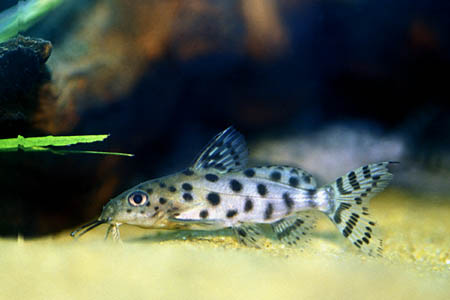
Synodontis ocellifer (Ocellated Synodontis) can be mixed with robust, peaceful to semi-aggressive tankmates larger than 5 cm, though they can become territorial toward other bottom-dwellers and Synodontis species as they mature. Keep them in a well-structured aquarium at least 4 feet (120 cm) long with plenty of caves and visual barriers to minimize squabbles.
Compatible Tankmates
• African Cichlids. Medium-sized Rift Lake cichlids (such as Mbuna, Peacocks, or Tanganyikan species) are popular companions because S. ocellifer is hardy enough to adapt to their harder, alkaline water.
• Medium to Large Characins and Barbs. Active mid-water swimmers like Congo tetras, rainbowfish, and larger barbs (such as Denison or silver dollar barbs) safely occupy the upper levels without competing for bottom territory.
• Peaceful Medium Cichlids. South or Central American cichlids like severums, acaras, and festivums match their size and temperament well.
• Other Synodontis (With Caution). Mixing them with other Synodontis species is possible in large tanks with abundant rockwork and driftwood, though a single user on PlanetCatfish notes they can become territorial with age.
Tankmates to Avoid
• Small Fish and Shrimp. Because S. ocellifer grows to 20–25 cm (8–10 inches) and has a large appetite, tiny fish like neon tetras, guppies, and dwarf shrimp will likely be eaten.
• Timid Bottom-Dwellers. Small Corydoras, kuhli loaches, or shy plecos may be outcompeted for food or bullied out of hiding spots.
• Hyper-Aggressive Predators. Extremely aggressive cichlids (such as Red Devils or Jaguars) or large predatory monsters can injure even an armoured catfish.
Key Setup & Water Tips
• Water Parameters. Aim for a temperature of 23–28°C (74–82°F) and a pH between 6.2 and 8.0, per the Seriously Fish Synodontis ocellifer profile.
• Substrate and Cover. Use soft sand to protect their delicate barbels and provide bogwood, rock caves, and sturdy plants so every bottom-dweller can claim a territory.
• Diet. Feed a varied omnivorous diet of high-quality sinking pellets, frozen bloodworms, brine shrimp, and occasional vegetable matter. Take care not to overfeed, as the Maidenhead Aquatics care guide notes they are prone to bloating.
SKU: RT-309