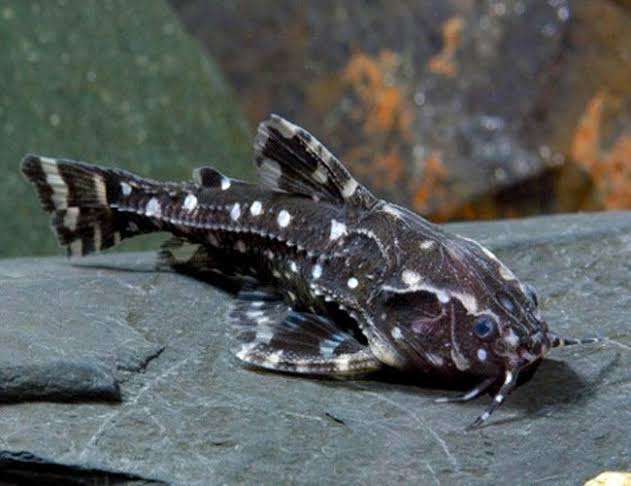
The White Spot Raphael Catfish (Agamyxis pectinifrons), also known as the Spotted Talking Catfish, is a hardy, nocturnal South American armoured catfish. Because "white spot" can refer either to this specific species or to a Raphael catfish suffering from Ich (white spot disease), both topics are covered below.
1. White Spot Raphael Catfish Care (Agamyxis pectinifrons)
This peaceful, slow-moving bottom-dweller gets its "talking" nickname from the grunting sound it makes by rubbing its pectoral fins against its body when stressed or removed from water.
• Adult Size and Lifespan. They grow to roughly 12–15 cm (5–6 inches) and can live for over 10 to 15 years in a well-maintained tank.
• Tank Setup. Provide an aquarium of at least 120 litres with plenty of floor space. Include smooth driftwood, caves, and dim lighting so they feel secure during the day. Use soft sand or smooth gravel to protect their sensitive barbels.
• Water Parameters. Keep temperatures between 24–28°C and maintain a pH of 6.0–7.5.
• Diet. They are omnivorous scavengers that feed primarily at night. Feed sinking catfish pellets, algae wafers, and occasional frozen foods like bloodworms or brine shrimp just after turning off the aquarium lights.
• Tank Mates. They are peaceful toward medium and large fish, though they will eat very small fish (like neon tetras) or dwarf shrimp that fit into their mouths at night.
• Handling Warning. Never use a standard fine-mesh net to catch them. Their serrated pectoral spines easily tangle in netting, so gently guide them into a plastic container instead.
2. Treating White Spot Disease (Ich) on a Raphael Catfish
If your Striped or Spotted Raphael catfish has developed new, grain-like white dots alongside flashing (scratching against rocks), clamped fins, or laboured breathing, it likely has Ich (Ichthyophthirius multifiliis). (Note: Natural markings on a Spotted Raphael are flat and embedded in the skin, whereas Ich looks like raised grains of salt.)
• Important Scaleless Sensitivity. Raphael catfish have bony armour plates rather than scales, making them highly sensitive to standard medications. Full-strength copper, formalin, or malachite green treatments can easily harm or kill them.
• Heat and Salt Method (Safest First Step). Gradually raise the water temperature to 29–30°C over 24–48 hours to speed up the parasite's life cycle. Add heavy aeration (an extra air stone), as warm water holds less oxygen. You can also add a half-dose of aquarium salt (about 1 tablespoon per 20 litres), dissolved fully before adding.
• Medication Adjustments. If using a commercial Ich medication (such as products containing malachite green), always dose at half-strength for catfish and remove activated carbon from your filter before treating.
• Daily Maintenance. Perform a 25–30% water change and vacuum the gravel daily to remove parasites that have dropped off the fish into the substrate. Continue treatment for at least 3–4 days after the last visible white spot disappears.
SKU: RT-182