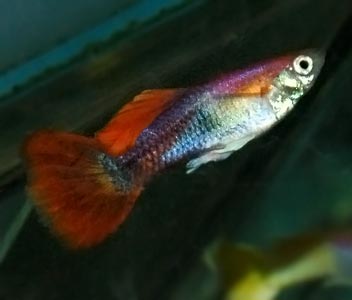
The Merrygold Tuxedo Guppy (commonly spelled Marigold Tuxedo) is a vibrant, selectively bred variant of the fancy guppy (Poecilia reticulata). It is highly prized for its striking colour contrast, featuring a glossy, dark iridescent black "tuxedo" pattern across the rear half of its body that transitions into a brilliant, warm marigold orange-yellow tail and dorsal fin.
🐠 Appearance & Characteristics
• Colouration: A stark contrast between a lighter or silvery front torso, a deep black lower/rear body block, and a rich, fiery marigold-yellow or orange caudal fin.
• Size: Males typically grow to 3–4 cm, showing off long, flowing fins. Females are larger, reaching 4–6 cm, with rounder bodies and less intense fin colouration.
• Temperament: Highly active, peaceful, and social. They do best when kept in groups of three or more.
🏠 Tank Requirements & Water Parameters
Marigold Tuxedos are hardy and adaptable, making them fantastic choices for both beginners and experienced keepers.
• Minimum Tank Size: 40 Litres (approx. 10 gallons) or larger. They thrive beautifully in planted community or nano aquariums.
• Temperature: 22°C to 28°C
• pH Range: 7.0 – 8.2 (They prefer slightly alkaline, hard water)
• Water Hardness: 8 – 18 dGH
• Maintenance: Regular weekly water changes of about 10–15% using a dechlorinated water conditioner.
🍽️ Diet & Feeding
They are enthusiastic, omnivorous feeders. To maintain their vibrant marigold coloration and fin health, offer a varied diet 2–3 times daily:
• High-quality tropical micro-pellets or flake food
• Spirulina or vegetable flakes
• Occasional live or frozen treats like baby brine shrimp, daphnia, or bloodworms
⚖️ Compatibility & Breeding
• Ideal Tank Mates: Keep them with other peaceful, small community species like Tetras, Rasboras, Corydoras catfish, and dwarf shrimp.
• Species to Avoid: Do not house them with aggressive fin-nippers (like Tiger Barbs), as their long, flowing tails are easy targets.
• Breeding: Like all guppies, they are prolific livebearers. If you intend to mix genders, keep a ratio of 2–3 females per male to ensure the males do not exhaust a single female with constant courtship. Provide floating plants (like Java Moss or Water Lettuce) to give the newborn fry a place to hide.
SKU: GM-0355