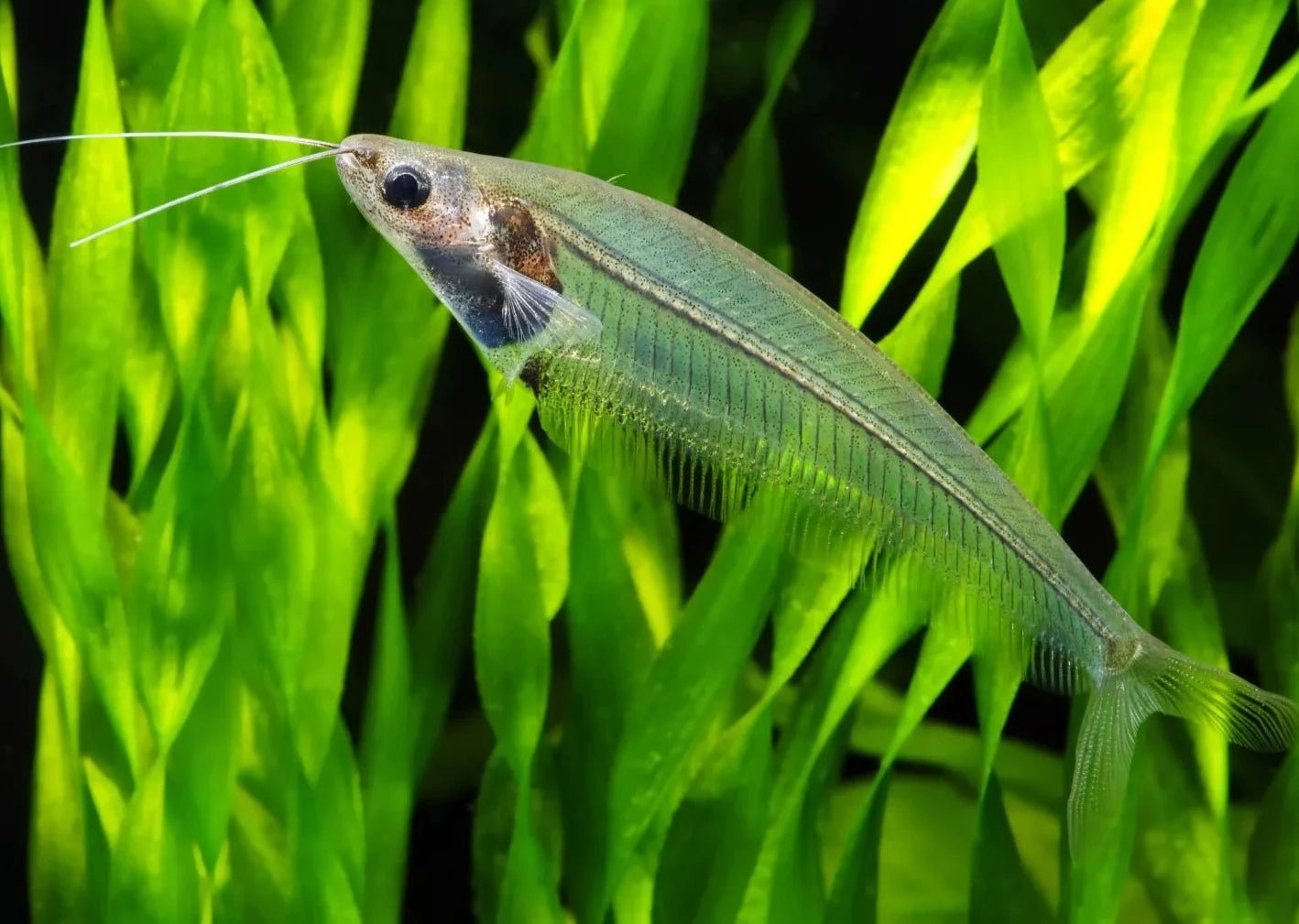
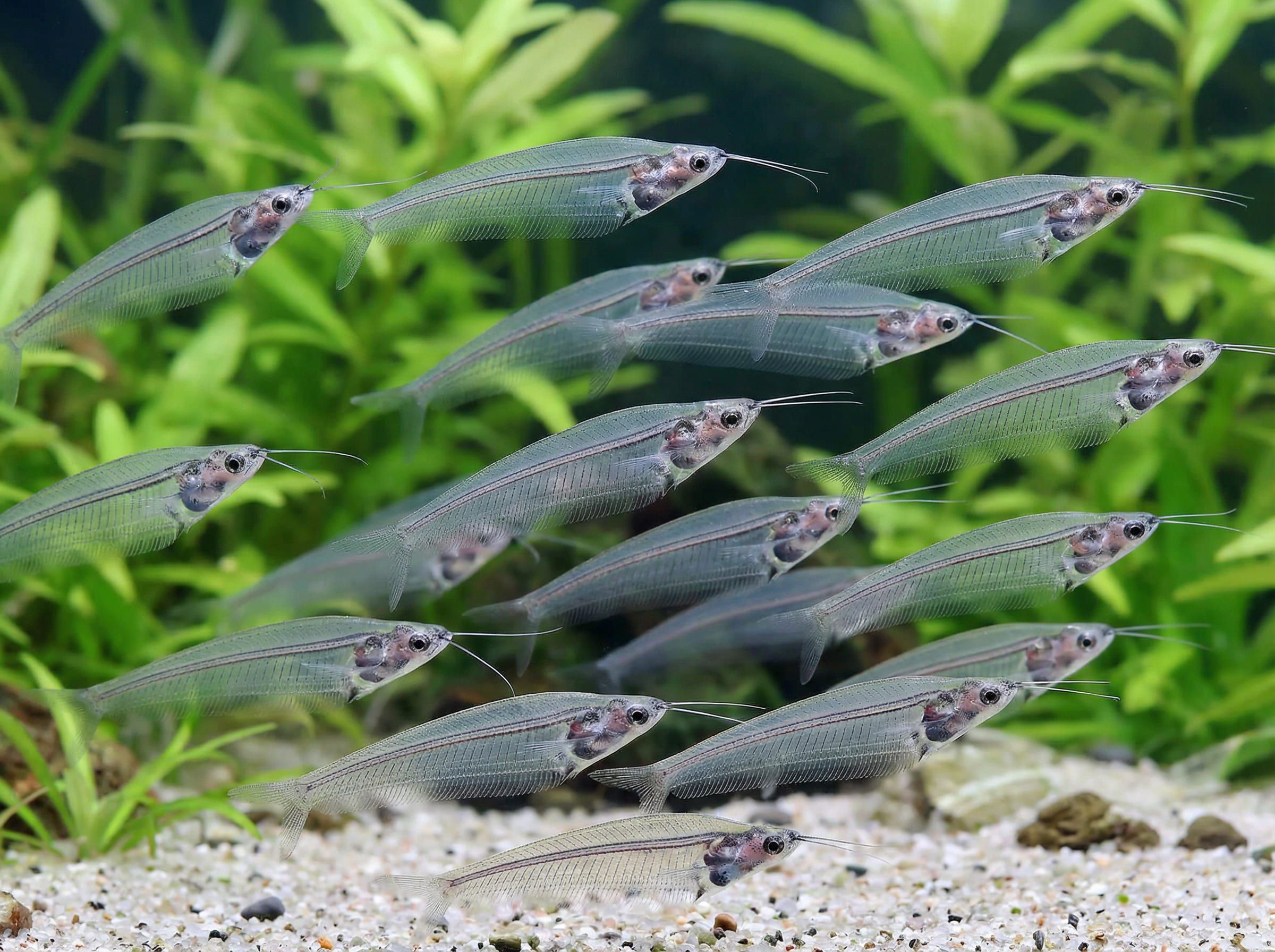
The glass catfish (Kryptopterus vitreolus)—also widely known as the ghost catfish or phantom catfish—is a highly unique freshwater fish celebrated for its completely transparent flesh. Because they lack scales and body pigment, their skeleton and beating heart are entirely visible to the naked eye. When light hits their bodies at specific angles, they create a mesmerizing, iridescent rainbow shimmer.
Native to slow-moving, heavily vegetated river basins in Thailand, these peaceful, timid middle-region swimmers make fantastic additions to community aquariums if their specialized needs are met.
Quick Facts & Care Requirements
Category Specifications
Scientific Name Kryptopterus vitreolus (often historically misidentified as K. bicirrhis)
Adult Size 2.5 to 3 inches (6.5 to 8 cm)
Lifespan 5 to 8 years under optimal care
Tank Size Minimum 30 gallons (115 L)
Water Parameters Temp: 70–79°F (21–26°C) | pH: 6.0–7.0 | Soft to moderate hardness
Social Behavior Strict schooling fish (must keep a group of 6 or more)
Diet Carnivorous/Omnivorous; prefers live or frozen micro-foods
Key Husbandry & Behavior Insights
• Essential Schooling: Glass catfish are true shoaling fish. Keeping them alone or in pairs causes immense stress, which results in the fish turning a milky-white color and wasting away. A group of 8 or more helps them feel secure and display natural, synchronized mid-water swimming patterns.
• Aquarium Setup: They prefer a well-planted tank with plenty of open swimming space, driftwood, and subdued or dim lighting. They love hanging motionless in the water column while facing directly into a gentle, soft filter current.
• "Super Sense" Barbels: While they have large eyes to detect shadows and light shifts, their vision is practically useless for finding food. Instead, they rely on their long, sensitive whiskers (barbels) to feel for food particles drifting in the current.
• Dietary Preferences: They can be picky eaters and often ignore commercial flake food initially. They thrive on small live or frozen foods such as daphnia, baby brine shrimp, and bloodworms, alongside high-quality micro pellets.
• Compatible Tank Mates: Due to their incredibly shy nature, they must only be housed with calm, non-aggressive tank mates such as Rasboras, Tetras, Corydoras catfish, and dwarf gouramis. Avoid any fin-nippers or large, aggressive species.
SKU: CT-0065