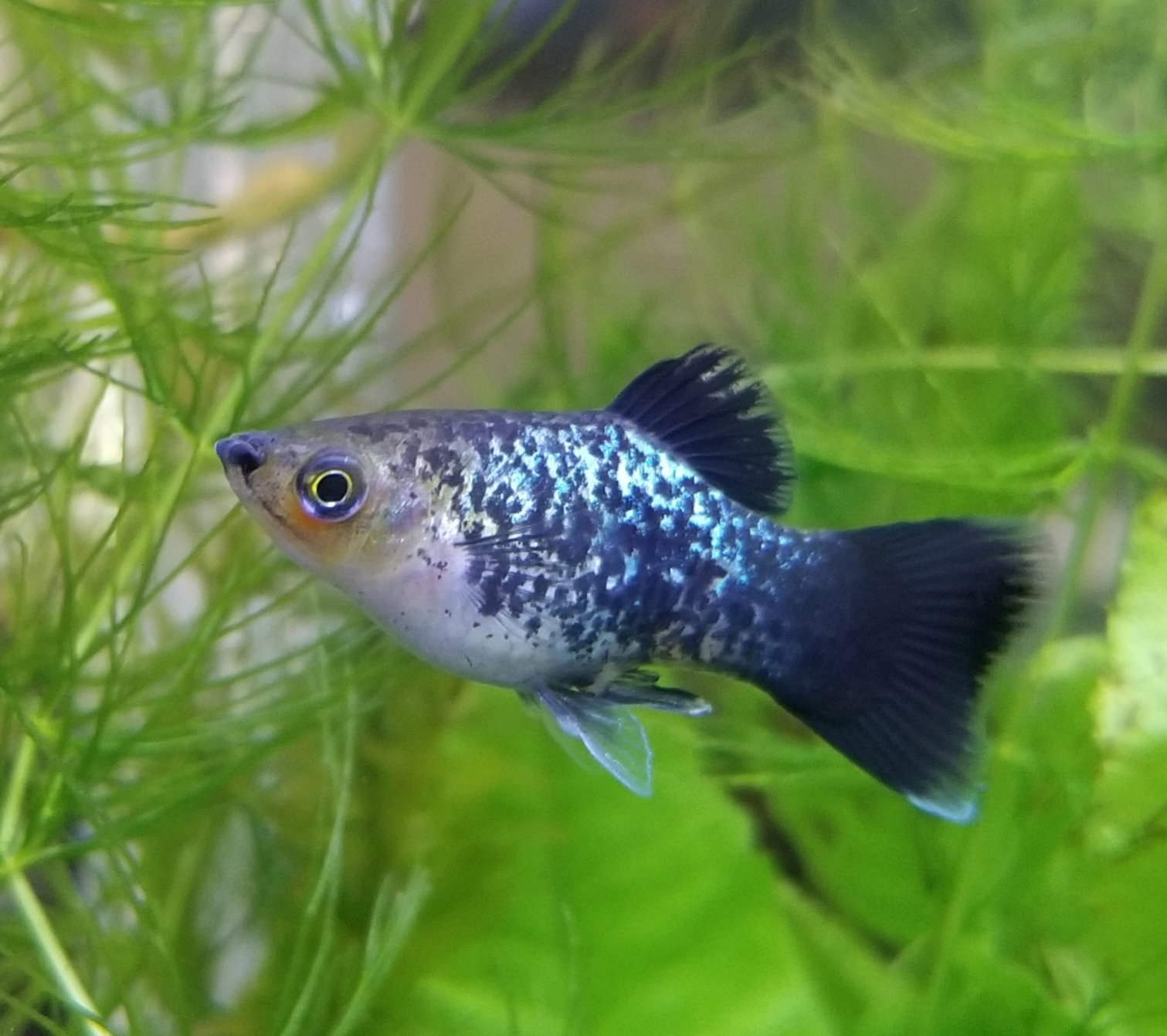
Black spots on a platy (Xiphophorus maculatus) are most often natural genetic markings or harmless pigmentation changes, though they can occasionally signal poor water quality, healing wounds, or parasites.
Common Harmless Causes
• Natural color genetics. Many platy varieties—such as Calico, Tuxedo, Wagtail, and Salt-and-Pepper strains—naturally carry black spotting genes that can darken or spread as the fish matures.
• Gravid spot. In female platies, a dark black or brown patch near the rear anal fin is a normal sign of pregnancy.
• Healing tissue. Minor nips from tank mates or scrapes from decor often turn black temporarily while the scales and skin heal.
Health & Water Quality Concerns
If the spots appear suddenly alongside lethargy, clamped fins, loss of appetite, or "flashing" (rubbing against tank objects), check the following:
• Ammonia or nitrite spikes. Elevated waste levels burn fish skin, leaving dark smudges or spots as the tissue recovers. Ensure ammonia and nitrite read 0 ppm and nitrates stay below 20–40 ppm.
• Black spot disease (trematodes). Tiny, raised, pepper-like black specks can be encysted parasitic flatworm larvae. These rarely harm the fish directly and require freshwater snails in the tank to complete their life cycle.
• Melanoma. Certain hybrid platies carrying specific black-spot genes can develop dark, raised tumors over time, as discussed by a user on Aquarium Co-Op.
Quick Action Checklist
1. Test your water. Check ammonia, nitrite, and nitrate levels immediately and perform a 25–30% water change if parameters are off.
2. Observe behavior. If the fish is swimming actively and eating well, no medication is needed.
SKU: P-0145