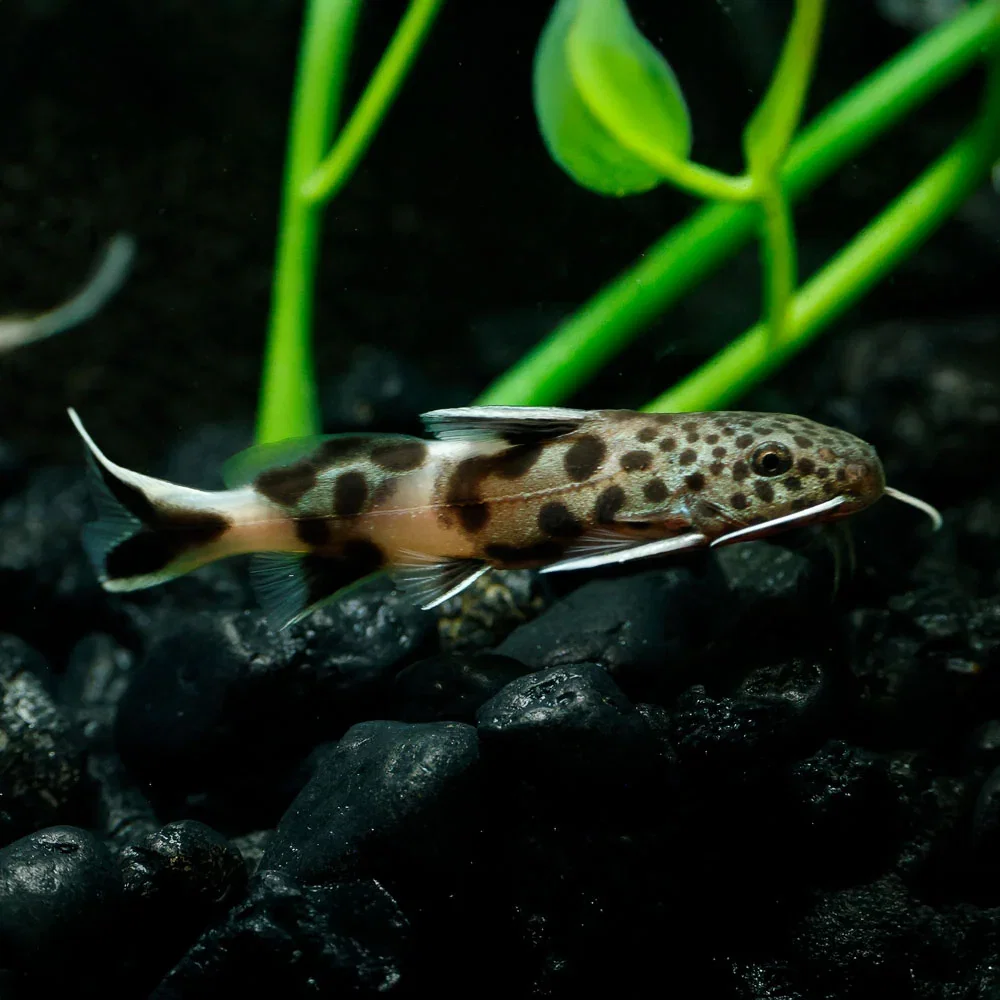
The Dwarf Lake Synodontis (Synodontis petricola, also widely sold in the hobby as S. lucipinnis) is a small, peaceful squeaker catfish endemic to the rocky shores of Lake Tanganyika in East Africa. Growing to just 10–13 cm (4–5 inches), it is prized by aquarists for its leopard-spotted body, crisp white-edged fins, and active social behaviour.
Quick Care Overview
Attribute Requirement
Adult Size 10–13 cm (4–5 inches)
Minimum Tank Size 100–115 litres (approx. 30 US gallons) for a small group
Social Needs Shoaling species; keep in groups of 4 to 6 or more
Temperature 24–28°C (75–82°F)
pH & Hardness pH 7.5–8.5; moderately hard to hard water (10–35 dGH)
Temperament Peaceful and social; safe with fish too large to swallow
Lifespan 10+ years with proper care
Tank Setup & Behaviour
• Substrate and Hardscape. Use fine sand or smooth gravel to protect their delicate sensory barbels. Provide plenty of rock piles, caves, and driftwood crevices so the fish have secure daytime shelters.
• Activity Levels. While naturally nocturnal and active at dusk, captive-bred groups regularly venture out during the day once they feel secure in a shoal. They frequently swim upside down along rock surfaces and cave ceilings.
• Tank Mates. They are ideal companions for African rift lake cichlids, rainbowfish, and sturdy community fish. Avoid keeping them with tiny nano fish or dwarf shrimp that can fit into their mouths.
Diet & Feeding
• Omnivorous Scavengers. Feed a varied diet of sinking catfish pellets, algae wafers, and quality flakes.
• Meaty & Plant Treats. Supplement their staple diet with frozen or live foods such as bloodworms, brine shrimp, and daphnia, alongside blanched vegetables like zucchini or spinach.
Taxonomy Note (S. petricola vs. S. lucipinnis)
• Single Species Consensus. For years, aquarium shops separated the slightly smaller "Dwarf Petricola" (S. lucipinnis) from standard S. petricola based on spot size and fin markings. Recent genetic and morphological studies covered by Aquarium Glaser and discussed by hobbyists on Reddit's r/Aquariums confirm that S. lucipinnis is a regional colour and size variant rather than a separate species.
• Breeding Method. Unlike the true Cuckoo Catfish (Synodontis multipunctatus), which parasitizes mouthbrooding cichlids, S. petricola is an egg-scattering crevice spawner that deposits eggs inside dark rock gaps or caves.
SKU: CT-0125