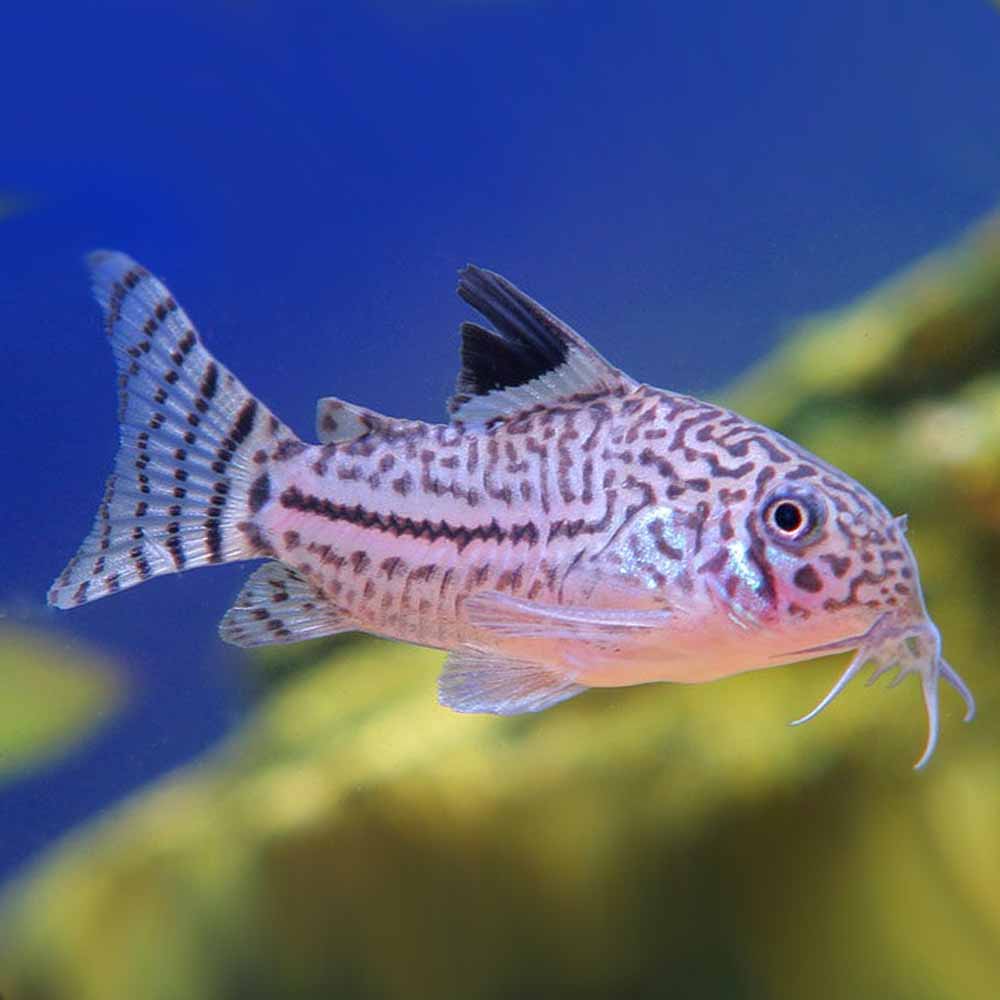
The Julii Corydoras (Hoplisoma julii, formerly Corydoras julii) is a small, highly peaceful, and active bottom-dwelling armored catfish native to northeastern Brazil. Known for its striking spotted pattern, it is a staple in the freshwater aquarium hobby. However, it is frequently confused with the False Julii (Hoplisoma trilineatum), which accounts for the vast majority of fish sold under the "Julii" label in pet stores.
🐟 Species Profile & Water Parameters
• Adult Size: 5 cm (2 inches)
• Lifespan: 3 to 5 years (up to 10 in optimal conditions)
• Minimum Tank Size: 75 litres (20 gallons)
• Temperature: 22°C – 26°C
• pH Range: 6.0 – 7.5 (up to 7.8 is acceptable)
• Water Hardness: 2 to 15 dGH
🔍 True Julii vs. False Julii (C. trilineatus)
Because retailers regularly mislabel these two species, it helps to know how to differentiate them visually:
• True Julii (H. julii): Features isolated, fine, round black dots on its head and clear space between markings. It is exceptionally rare in the commercial trade.
• False Julii (H. trilineatus): Features vermiculated (squiggly, maze-like) lines or interconnected reticulated patterns on its head rather than distinct dots.
🌿 Tank Setup & Care Requirements
• Substrate Choice: Fine, smooth sand is highly recommended. Corydoras use delicate sensory barbels to forage through the substrate for food. Rough or sharp gravel will abrade their barbels, leading to painful infections, loss of feeding ability, and severe health declines.
• Social Dynamics: They are highly social schooling fish and must be kept in a group of at least 6 individuals of the same species to feel safe and exhibit natural behaviors.
• Environment: Provide plenty of low-light hiding zones using driftwood, smooth rocks, and dense live plants, while preserving open sandy floor areas for scavenging. They are also intestinal air-breathers, meaning they will occasionally dart to the surface for a gulp of air—ensure there is a clear path to the surface and a secure aquarium lid.
🍽️ Diet & Feeding
Julii Cories are not algae eaters. They are omnivorous bottom-scavengers that require a dedicated feeding regimen rather than just relying on aquarium leftovers.
• Staple Diet: High-quality sinking catfish pellets, granules, or crushed wafers.
• Protein Treats: Supplement regularly with live or frozen foods such as bloodworms, brine shrimp, and daphnia.
• Feeding Tip: Feed them after the lights go out or use a target feeding tube to make sure faster, upper-dwelling community tankmates do not steal their food before it hits the bottom.
SKU: CR-0065