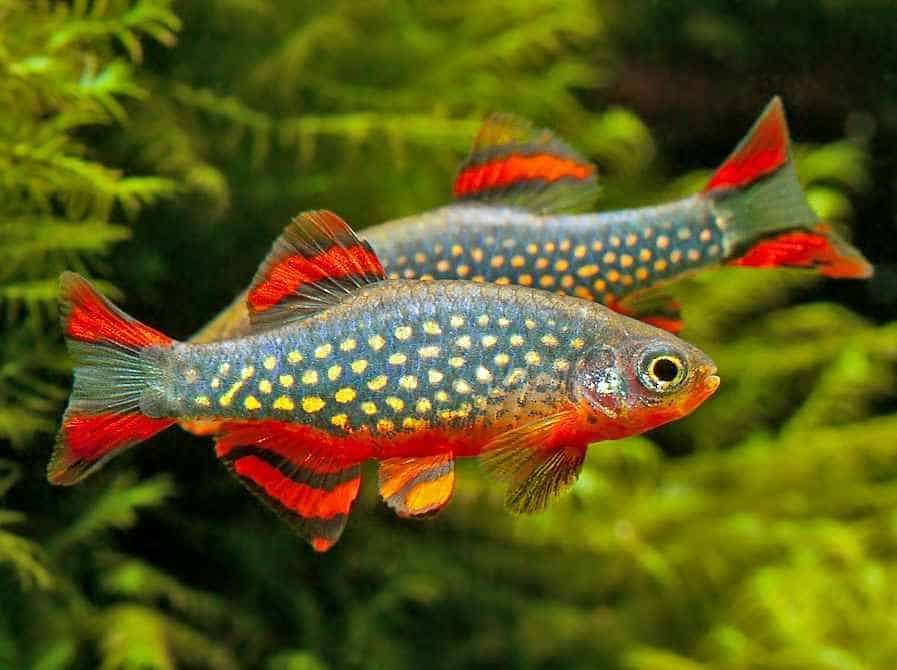
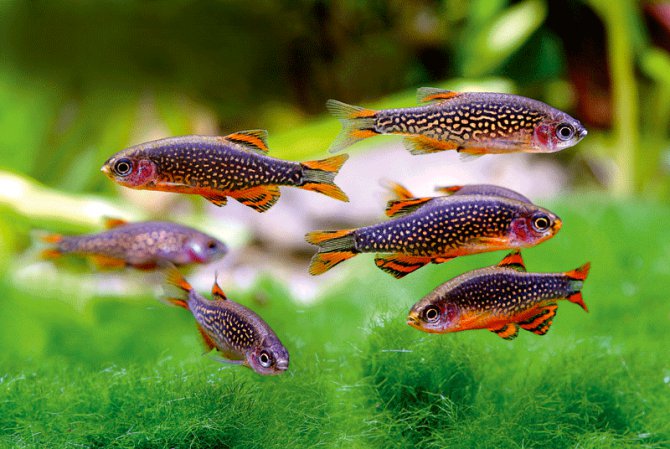
The Micro Galaxy Rasbora, most commonly known as the Celestial Pearl Danio (CPD) or Danio margaritatus, is a striking nano freshwater fish native to shallow, spring-fed alpine marshes in Myanmar. Famous for their "starry night" visual profile, they feature dark blue-green bodies covered in pearl-like spots and intense red-orange striped fins.
📊 Quick Care Specifications
Parameter Target Range
Scientific Name Danio margaritatus (Formerly Microrasbora sp. 'Galaxy')
Adult Size 1.5 to 3 cm (approx. 1 inch)
Minimum Tank Size 38 Litres (10 Gallons) for a small school
Water Temperature 22°C to 24°C (Prefers cooler water; temperatures above 26°C can fade their color)
pH Range 6.5 to 7.5 (Highly adaptable, but ideal near neutral)
Water Hardness 2 to 10 dGH
Lifespan 3 to 5 years with proper husbandry
🌿 Aquarium Setup & Environment
• Dense Vegetation: Because they are naturally shy, they require a heavily planted tank. Utilising fine-leaved species like Java Moss, Hydrocharitaceae, or floating plants provides vital security and spawning sites.
• Filtration: They originate from slow-moving or still waters. A gentle flow is highly recommended—air-powered sponge filters are an ideal choice.
• Substrate & Cover: A dark substrate helps reduce stress and makes their brilliant colors pop. Ensure the aquarium has a tight-fitting lid, as these active fish can jump.
👥 Behaviour & Social Structure
• Schooling Numbers: They should be kept in groups of at least 6 to 10 fish. Keeping them in a larger group helps distribute minor inter-male aggression and significantly coaxes them out of hiding.
• Tank Mates: Choose small, peaceful nano tank mates. They do excellently with other nano rasboras, Otocinclus, pygmy corys, freshwater snails, and dwarf shrimp (they are widely considered shrimp-safe). Avoid large or overly active tank mates that might outcompete them for food or intimidate them.
🍽️ Diet & Nutrition
Micro Galaxy Rasboras are opportunistic micro-predators. Because they have tiny mouths, their food must be appropriately sized:
• Prepared Foods: High-quality micro-pellets (under 0.5mm) or finely crushed tropical flakes.
• Live & Frozen Foods: They thrive when fed baby brine shrimp, Daphnia, Cyclops, and microworms.
♂️♀️ Sexing & Breeding
• Sexual Dimorphism: Males are noticeably slimmer and display intense deep-blue body coloration with brilliant red/black striped fins. Females are rounder, particularly when gravid, and present a more subdued golden-olive body coloration.
• Breeding: They are continuous egg-scatterers, dropping batches of around 30 slightly adhesive eggs in dense moss or spawning mops. Because parents will eagerly eat their own eggs, a separate, dedicated breeding tank is recommended. Eggs hatch in 3 to 4 days, and the fry initially require microscopic foods like infusoria or specialized liquid fry foods.
SKU: RS-0065