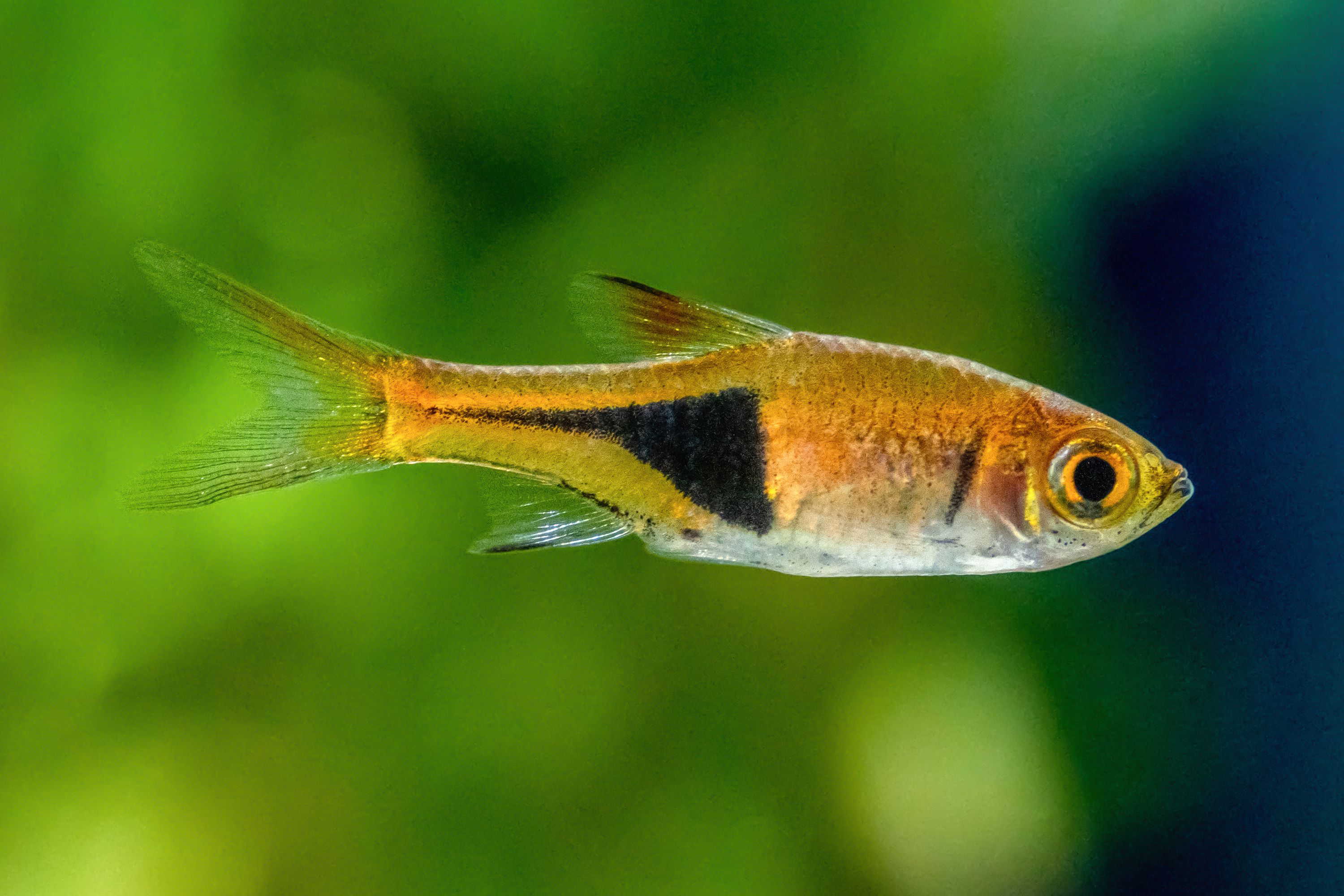
The Harlequin Rasbora (Trigonostigma heteromorpha) is a classic, hardy, and vibrant freshwater community fish native to the peat swamp forests of Southeast Asia. Famous for their striking coppery-orange bodies and iconic black triangular wedge patch, they are an excellent choice for both beginners and experienced aquarists due to their peaceful nature and dynamic, synchronized schooling behaviour.
🐟 Quick Fact Sheet
• Scientific Name: Trigonostigma heteromorpha (formerly Rasbora heteromorpha)
• Adult Size: 3 to 5 cm (around 1.5 to 2 inches)
• Lifespan: 5 to 8 years under optimal care
• Social Care: Strictly a schooling/shoaling species. Keep a minimum of 6 to 10 individuals to see natural hierarchies, active schooling, and vibrant coloration.
💧 Aquarium Environment & Water Parameters
Harlequin Rasboras are highly adaptable, but they thrive best in environments mimicking their natural blackwater streams:
• Tank Size: Minimum 40+ litres (10 gallons), though a 75+ litre (20 gallon) tank is ideal to allow plenty of open swimming room for a robust school.
• Temperature: 22°C to 28°C (72°F to 82°F)
• pH Range: 5.0 to 7.5 (preferring slightly acidic to neutral water)
• Water Hardness: Soft water, 1 to 12 dGH
• Aquascape Layout: Ideal setups include dense live plants (such as Cryptocorynes or Java Fern) along the sides/back, a dark sand substrate, and leaf litter. Dimmed lighting helps highlight their intense metallic, copper-red pigmentation.
🍽️ Diet & Feeding
They are active, top-to-middle-layer feeders with an omnivorous diet. They are not picky eaters and will readily consume:
• High-quality crushed flakes and micro-pellets.
• Frequent treats of live or defrosted foods like Daphnia, Baby Brine Shrimp, and Bloodworms to enhance their colors and condition them for breeding.
🤝 Tank Mates
Harlequins are incredibly non-aggressive and pair beautifully with small, peaceful community fish. Excellent choices include:
• Other peaceful nano fish like Neon Tetras or smaller Gouramis.
• Bottom dwellers like Corydoras catfish or smaller Loaches.
• Note: While they are gentle, they may opportunistically prey on very tiny, newborn shrimp or fish fry.
🥚 Unique Breeding Behavior
Unlike standard egg-scattering rasboras, Harlequins are broad-leaf egg depositors. When breeding, the pair will swim upside down underneath large plant leaves (such as Cryptocoryne or Hygrophila) to attach adhesive eggs. Successful breeding usually requires very soft, acidic water (~4°dH, pH 6.4) raised to about 28°C. Parental care is non-existent, and adults will eat their own eggs if left in the breeding tank.
SKU: RS-0005