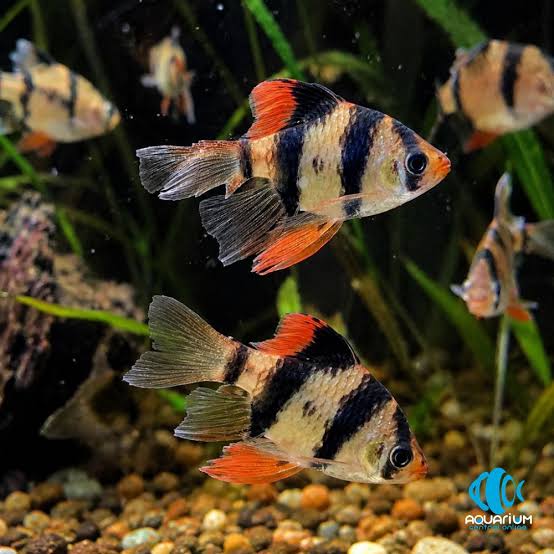
The Longfin Tiger Barb (Puntigrus tetrazona) is an energetic, selectively bred color morph of the standard tiger barb. Developed via line breeding to stabilize a recessive gene, it retains the classic bold black vertical stripes and golden-orange hues of the wild type but features strikingly elongated, trailing finnage. While they are highly captivating swimmers, their long fins alter their husbandry needs significantly compared to standard barbs.
🏠 Tank Requirements & Environment
• Minimum Tank Size: 110 to 200 litres (approx. 30–55 gallons). They need ample horizontal swimming space to accommodate their active behavior and larger fin span.
• Water Parameters: Maintain a temperature range of 22°C–26°C (72°F–79°F), a pH of 6.0–8.0, and soft to moderately hard water.
• Aquascape: Use dense vegetation around the perimeter for hiding spots, leaving an open central area for swimming. A dark substrate and river stones create a beautiful contrast that enhances their natural colors.
🐟 Behavior and Social Dynamic
Longfin Tiger Barbs are notoriously semi-aggressive fin-nippers. They have a tight, strict hierarchy and must be kept in a school of at least 6 to 12+ individuals. Keeping them in a large group distributes internal aggression within the school, preventing them from bullying other fish or tearing each other's long fins.
🚫 Tank Mate Compatibility
Choosing neighbors requires caution due to their dual nature as both fin-nippers and targets for nipping.
• Avoid: Slow-moving or long-finned fish like Bettas, Angelfish, and Guppies. Paradoxically, you must also be careful keeping them with normal tiger barbs, as the standard shorter-finned varieties may nip and shred the trailing fins of the longfin morph.
• Ideal Match: Fast-moving schooling fish like Danios or Rasboras, and peaceful bottom-dwellers like Corydoras catfish or Plecos.
🍽️ Diet and Nutrition
They are opportunistic omnivores that accept a wide range of foods. To maintain the vivid red edge on their fins and ensure optimal energy, feed them high-quality tropical flakes or pellets supplemented with live or frozen treats like bloodworms, brine shrimp, and daphnia, alongside plant-based foods containing spirulina.
SKU: BR-0305