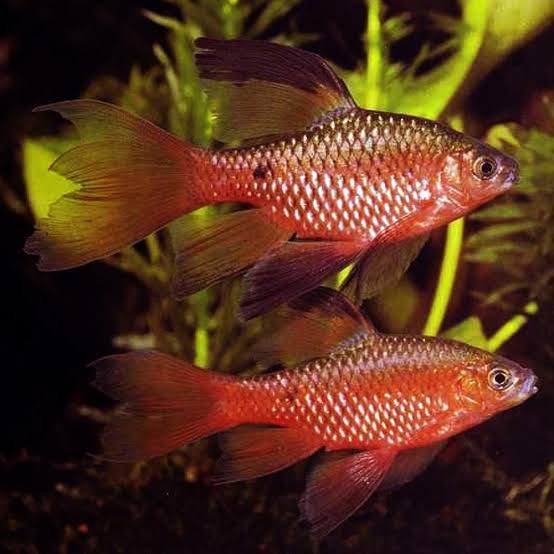
The Rosy Longfin Barb (Pethia conchonius var. "Longfin") is an elegant, highly active, and exceptionally hardy freshwater fish variant prized for its dramatically extended fins and shimmering metallic colors. They are popular, beginner-friendly options that bring immense energy and vibrant reddish-pink hues to larger community setups.
🧬 Physical Appearance & Sexual Dimorphism
• The Longfin Trait: Unlike the standard variety, this captive-bred morph features a major extension of the dorsal, caudal (tail), and anal fins, which gracefully trail behind the fish as they dart through the water column.
• Males: Develop a striking deep rosy, copper, or blood-red coloration across their torpedo-shaped bodies, usually finished with dark or black-tipped edges on their elongated fins.
• Females: Are noticeably plumper, less vibrant, and carry a softer golden, yellow, or olive-silver tone with clear fins.
🏠 Tank Requirements & Water Parameters
Because they are dynamic, energetic swimmers that reach an adult size of 10 cm (4 inches) in captivity, they need plenty of horizontal swimming space.
• Minimum Tank Size: 114 litres (30 gallons) for a small group, though a 4-foot long tank (150+ litres) is highly recommended for larger schools to flourish.
• Temperature: 18°C – 24°C (64°F – 75°F). They thrive in slightly cooler subtropical waters and do exceptionally well in unheated indoor tanks.
• pH Range: 6.0 – 8.0.
• Water Hardness: 5 – 20 dGH.
• Tank Setup: Use a secure, fitted lid because these active fish are known jumpers. Provide a moderate filter flow to simulate their native river habitats, mixed with open swimming spaces and robust plants around the perimeter.
🤝 Behavior & Tank Mates
• The Schooling Rule: You must keep them in groups of at least 6 or more (8 to 10 is ideal). Keeping them in smaller numbers causes stress and triggers their natural instinct to nip at fins.
• Fin Nipping Warning: Even in a healthy school, their trailing fins and fast-paced nature mean they should not be kept with slow-moving or long-finned fish like Bettas, Guppies, or Angelfish.
• Ideal Matchups: They cohabitate beautifully with other robust, active species such as short-finned barbs, danios, larger tetras, loaches, and peaceful bottom-dwelling catfish.
🍽️ Diet & Nutrition
Rosy Barbs are unfussy, stomachless omnivores that use specialized gill rakers to process a wide variety of foods. To keep their colors intense and vibrant, feed them a rotation of:
• High-quality tropical flakes or pellets containing vegetable/algae properties (like spirulina).
• Live or frozen treats such as bloodworms, daphnia, and brine shrimp.
• Occasional blanched vegetables like crushed peas, zucchini, or spinach.
SKU: BR-0155