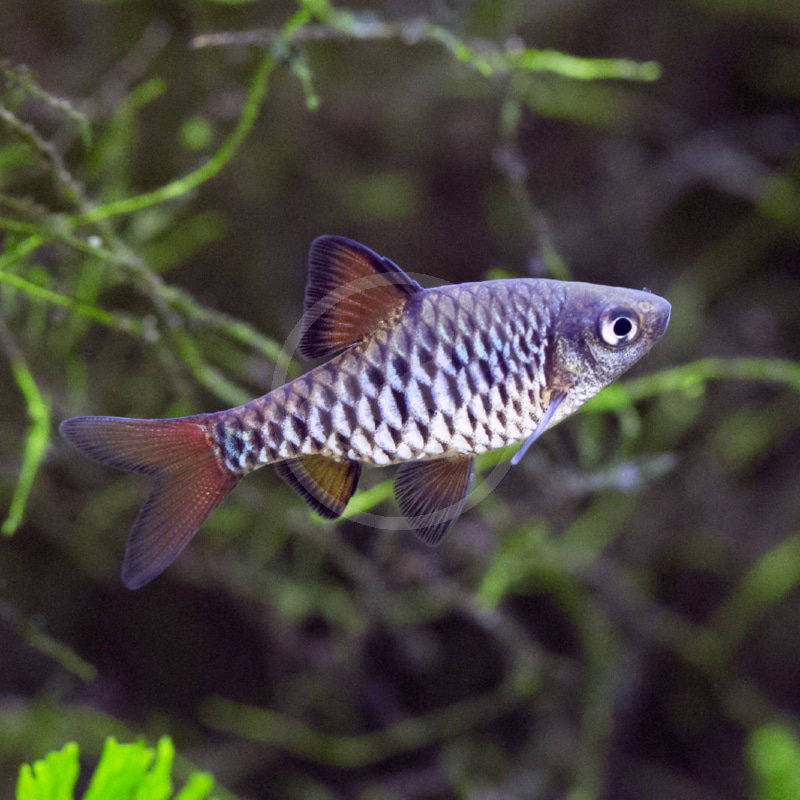
The Checkered Barb (Oliotius oligolepis, formerly Puntius oligolepis) is a highly peaceful, hardy, and active nano-sized cyprinid native to the streams and rivers of Sumatra, Indonesia. Unlike notoriously rowdy barbs like the Tiger Barb, the Checkered Barb is entirely peaceful and lacks any fin-nipping tendencies, making it an exceptional candidate for community and planted aquariums.
📋 Quick Facts & Parameters
• Adult Size: 4.5 to 5 cm (approx. 1.75 to 2 inches).
• Minimum Tank Size: 60 to 75 Litres (approx. 15 to 20 gallons). Due to their high activity levels, horizontal swimming space is crucial.
• Temperature: 18°C – 25°C (64°F – 77°F).
• pH Range: 5.5 – 7.5.
• Water Hardness: 2 – 12 dGH (Prefers soft to moderately hard water).
• Lifespan: 4 to 8 years under optimal care.
🐟 Behaviour & Tank Mates
Checkered Barbs are classic schooling fish and must be kept in groups of at least 6 to 10 individuals. Keeping them in a proper school helps reduce shyness, encourages natural interaction, and brings out their best coloration.
• Ideal Companions: They integrate flawlessly with other calm nano fish like Cherry Barbs, Rasboras, Tetras, Corydoras catfish, Otocinclus, and small Gouramis.
• Shrimp Safety: Because of their gentle disposition and small mouths, they are generally considered shrimp-safe for adult dwarf shrimp.
• What to Avoid: Do not house them with massive or highly aggressive fish that might mistake them for food or intimidate them.
🌿 Tank Setup & Diet
• Aquarium Setup: Provide a well-planted environment with plenty of vegetation, floating plants for shade, and driftwood roots to replicate their wild pools. Leave an open swimming channel in the middle and lower-middle tiers of the tank where they spend most of their time.
• Feeding: They are undemanding omnivores. Offer a varied baseline of high-quality tropical flakes or micro pellets, supplemented with regular treats of frozen or live foods like baby brine shrimp, daphnia, cyclops, and bloodworms.
👫 Sexual Dimorphism & Breeding
• Telling Males from Females: Males are slimmer, smaller, and display a rich golden-bronze body hue alongside brilliant red-orange fins prominently outlined in black. Females are noticeably rounder, creamier or more yellow, with clear or faintly yellowish fins lacking the dark margins.
• Breeding Habits: They are egg-scatterers that spawn over fine-leaved plants or mosses in the early morning. They exhibit zero parental care and will aggressively consume their own eggs. If you intend to raise fry, you should set up a separate breeding tank and remove the parents immediately after spawning completes.
SKU: BR-0002