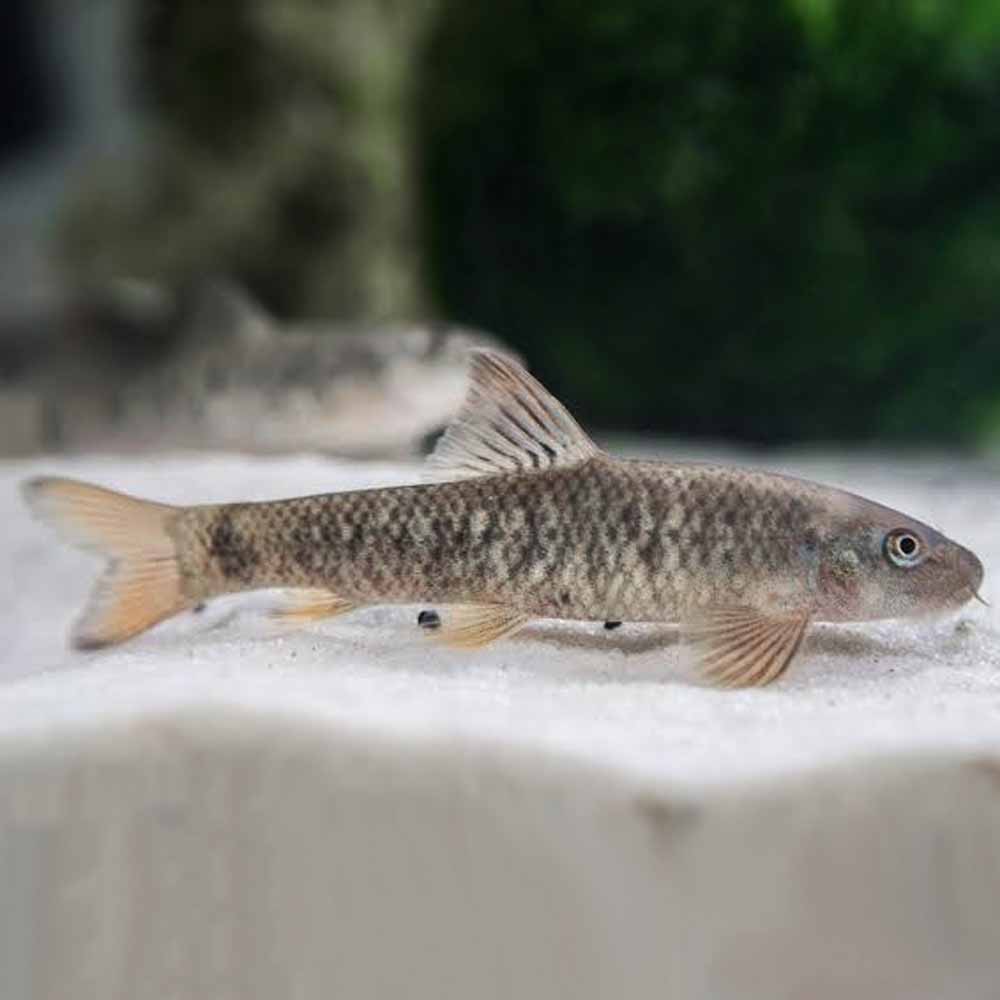
Garra rufa, most commonly known as the "Doctor Fish" or Red Garra, is a small, freshwater cyprinid native to the river basins and thermal springs of the Middle East, including Turkey, Syria, Iraq, and Iran. They are globally famous for their unique habit of nibbling away dead skin, making them the star attraction of fish spa pedicures. However, in the aquarium hobby, they are highly valued as hardworking, energetic algae eaters and fascinating community tank inhabitants.
The "Doctor Fish" Phenomena & Sensation
• Skin-Nibbling Behavior: They lack teeth and use a specialized, downward-facing suctorial mouth to scrape away algae, biofilm, and dead or flaky skin cells.
• Painless Sensation: Because they cannot bite, the sensation on human skin is entirely painless and usually described as a light, ticklish vibration or massage.
• Spa Controversy: While popular in commercial foot baths, the practice has faced strict regulatory bans and criticism from animal welfare groups due to water sanitation challenges and the common practice of starving the fish to force them to feed on skin.
Aquarium Care & Tank Requirements
If you are looking to keep these highly entertaining fish at home, they are hardy but have specific environmental preferences to thrive:
Parameter Requirement
Minimum Tank Size 100 Litres (approx. 30 gallons) for a small group.
Water Temperature Prefers cooler, subtropical conditions (14°C – 20°C), though adaptable up to 24°C.
Water Chemistry pH of 6.0 – 8.0; thrives with a moderate current and high oxygen levels.
Tank Setup Requires a smooth substrate, river rocks, and driftwood to mirror their fast-flowing river habitats.
Diet & Social Behaviour
• Social Dynamics: They are highly active shoalers with a complex social hierarchy. Keep them in groups of 3 to 6 or more. If kept alone, they can become uncharacteristically aggressive or boisterous toward similarly shaped tankmates.
• Omnivorous Diet: While they are relentless grazers of natural aquarium biofilm and algae, they cannot survive on tank waste alone. They should be fed a varied diet of algae wafers, sinking catfish pellets, and frozen treats like bloodworms or brine shrimp.
SKU: AE-0275